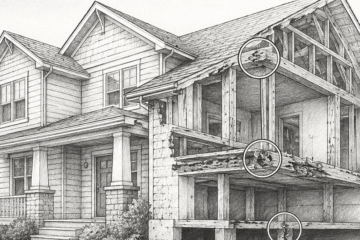
WASHINGTON · FIELD NOTE 01
SOPHI field guide for home inspectors
Washington structural pests:
know the evidence.
A Washington-specific guide to wood rot, pest-conducive conditions, carpenter and moisture ants, dampwood and subterranean termites, anobiid beetles—and what a home inspector may actually put in the report.

01 / PELLETS
Pacific dampwood termites leave distinctive, slightly hexagonal (six-sided) fecal pellets about 1/25 inch (1 mm) long—a remarkably useful field clue in damp or decayed wood.
STATE LENS
Moisture first
LICENSE TERM
WA-SPI
REPORT RULE
Observe → generalize → refer
SOURCE CHECK
September 2, 2026
The Washington license compass
Learn the organism. Write only what your license allows.
Washington uses the title Structural Pest Inspector (SPI or WA-SPI). The law does not ask a general home inspector to ignore warning signs. It requires a disciplined handoff between observation and regulated identification.
HOME INSPECTOR · NOT CURRENTLY WA-SPI
Report the condition. Do not name the insect.
- Report all discovered wood rot and pest-conducive conditions.
- Describe visible insect-related evidence in general terms and record its exact location.
- Refer every suspected insect issue to a licensed SPI or PCO.
- Do not attribute damage to termites, carpenter ants, beetles, or another named insect.
COMPLETE WDO INSPECTION
A separate regulated service.
- Requires the SPI endorsement and work through a licensed SPI company with current financial responsibility.
- Real-estate complete inspections follow WAC 16-228-2005 through 2045.
- The complete report requires a WSDA Inspection Control Number and prescribed findings.
- A general home inspection does not become a complete WDO inspection by adding pest language.
18.280.190
The working rule: without the chapter 15.58 pest credential, keep the report to rot, conducive conditions, general observable evidence, and referral. Recognition makes you sharper; restraint keeps the report lawful.
Build the complete Washington skill set
Washington students: earn the WA-SPI.
At SOPHI, we strongly encourage every Washington home-inspection student to pursue the Structural Pest Inspector license. It is the personal credential required before you can move beyond observation and referral toward providing a complete WDO inspection.
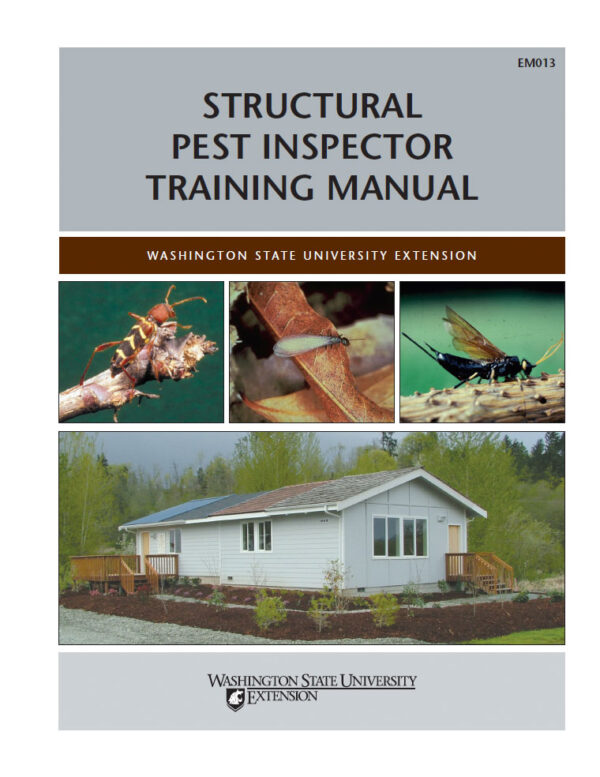
For exam preparation, start with Washington State University’s Structural Pest Inspector Manual (EM013). Buy the book, study it closely, and then take the two required examinations: SPI General and SPI Practical.
JJ’S RECOMMENDATION · WSU DAMAGE KEY
The best damage-identification tool I know for new inspectors.
With 15 years of experience as a Washington Structural Pest Inspector, I still consider EB1814 the best damage-identification tool for new inspectors. It was extremely useful when I earned my own license, and its method continues to shape how I teach inspectors to read visible evidence.
At SOPHI, Suz and I bring that real-world perspective into the classroom so students learn how to recognize evidence, think clearly, and write responsibly—not simply memorize enough to pass an exam.
WSU Extension bulletin EB1814, A Key to Identification of Pacific Northwest Wood-Destroying Pests Based on Wood Damage, was published in 1996, revised in 2003, and is still distributed through Washington State University. Its paired questions teach inspectors to read gallery form, pellets, exit-hole size, frass, moisture, and wood condition together.
Use it alongside the current EM013 manual, and confirm current examination and licensing requirements with WSDA.
01
Buy the manual
Use the official WSU Structural Pest Inspector Manual as your core Washington study resource.
02
Study and test
Prepare for and pass both the 100-question General exam and the 50-question Practical exam.
03
Complete the license path
Finish the WSDA application requirements and work through a licensed, currently insured SPI company.
Keep the finish line clear: passing the exams establishes the knowledge requirement. Conducting complete WDO inspections also requires the issued credential, a licensed SPI company with current financial responsibility, compliant reporting, and WSDA Inspection Control Numbers.
Under the rainline
Six Washington patterns to know
Moisture is not a footnote here. It is often the route from site condition to wood deterioration to insect opportunity.
01 · STATEWIDE DRIVER
Wood rot + moisture pathways
Follow roof runoff, grade, plumbing, condensation, wet crawlspace soil, failed sealant, deck connections, and wood contact. Describe softness, section loss, fungal bodies, or checking without claiming concealed extent.
02 · MAJOR INSECT CONCERN
Carpenter ants
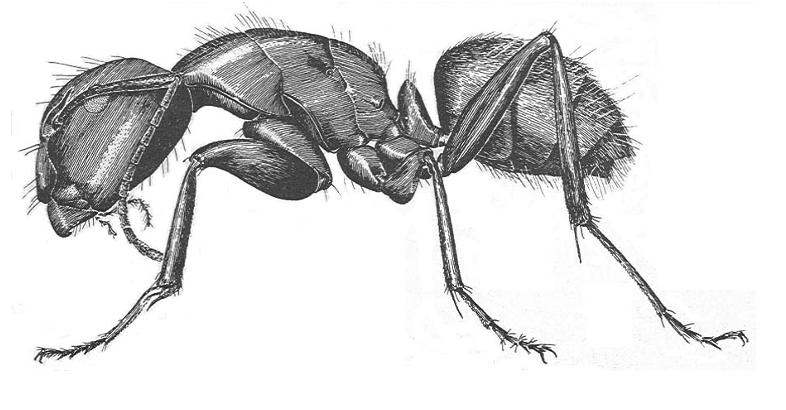
Washington problems are commonly associated with Camponotus modoc and C. vicinus. Look for coarse fibrous debris, smooth galleries, large ants, damp wood, nearby trees, stumps, logs, and travel routes.
Illustration: Roger D. Akre and Arthur L. Antonelli, WSU Cooperative Extension EM4040 (1980); via WSU Libraries Digital Collections; no known copyright.
03 · DECAY INDICATOR
Moisture ants
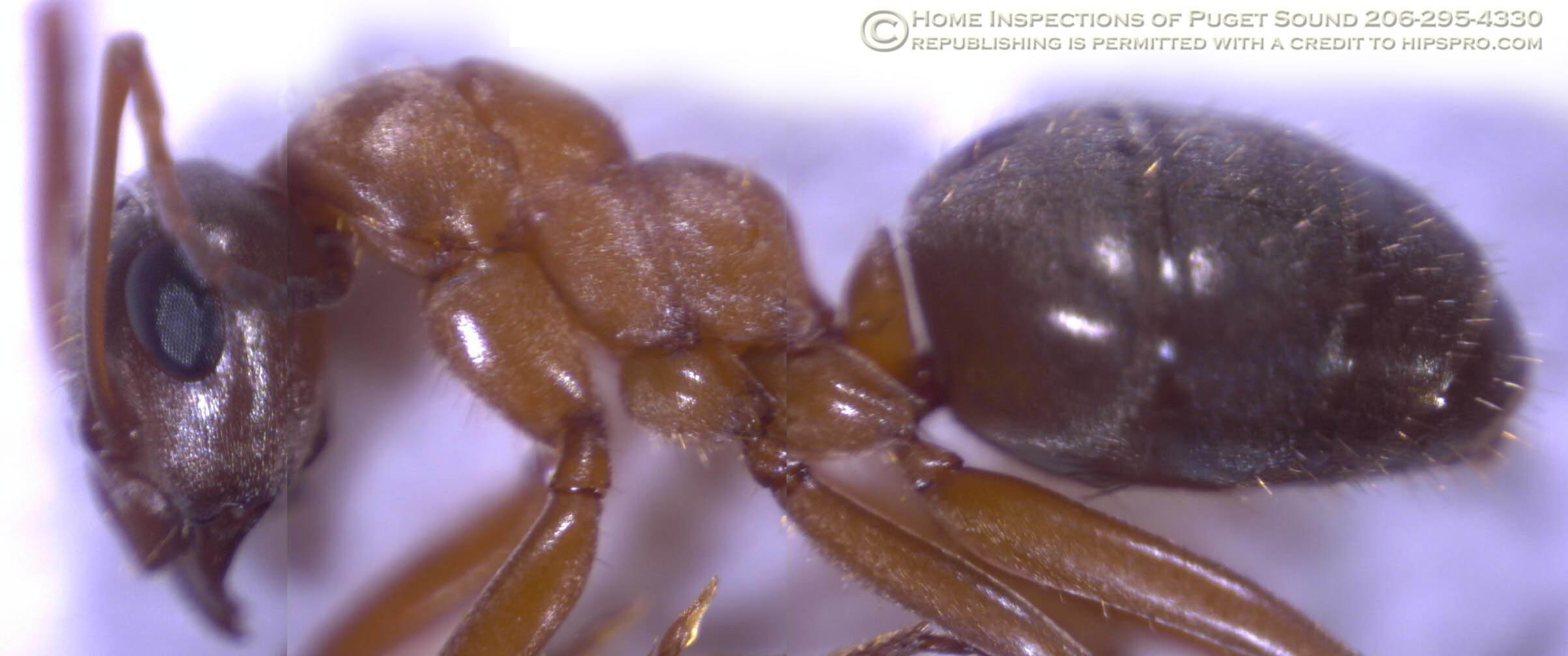
Washington’s common moisture ants typically occupy wood already in advanced decay. Small ants and carton-like material should send attention back to chronic wetting, damaged sills, buried forms, and soil contact.
Illustration supplied by JJ Greive. Select it to open the full-size HIPSPro image.
04 · WESTSIDE EMPHASIS
Pacific dampwood termites
They require wet or damp wood. Large reproductives, distinctive slightly hexagonal pellets, and galleries may accompany a leak, faulty grade, saturated wood contact, or condensation in a poorly ventilated crawlspace.
Image detail: JJ Greive, CC BY-SA 3.0. Select it to open the full photograph on Wikimedia Commons.
05 · EASTSIDE EMPHASIS
Western subterranean termites
More common east of the Cascades, but not confined there. Trace earthen tubes, soil access, porch and step interfaces, posts, slab penetrations, buried cellulose, and concealed foundation edges.
06 · COASTAL / OLDER HOMES
Anobiid beetles
Small round emergence holes, powder, and tunneling deserve context: affected species of wood, distribution, moisture, specimens, and apparent freshness. A hole by itself is not an activity determination.
Field evidence atlas
Photograph the clue. Describe the setting. Resist the leap.
The useful note connects pattern, scale, material, location, distribution, and moisture. These teaching images help with recognition; they do not authorize a named-insect conclusion in a non-SPI report.

E-01 / HEXAGONAL PELLETS
Read size, shape, wood, and water together
Record the pellet field and its source opening, then inspect the associated member for persistent wetting, decay, galleries, and loss of section. Do not turn pellet shape alone into an activity or species declaration.
Photo: JJ Greive, CC BY-SA 3.0, via Wikimedia Commons
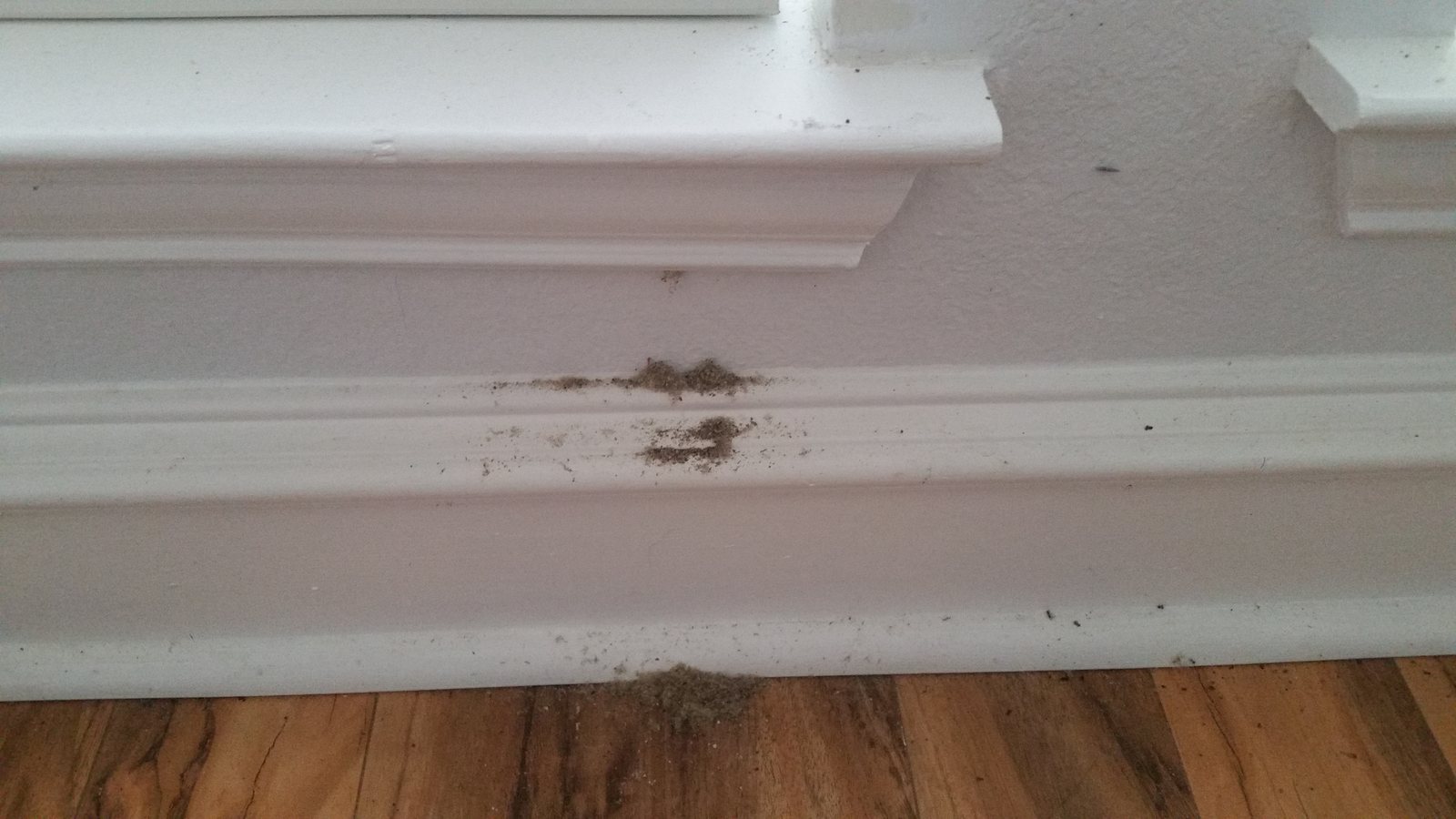
E-02 / COARSE DEBRIS
Look above the pile
Note fibers, insect parts, opening, smooth galleries, wet wood, trails, and vegetation bridges. Construction sawdust and other debris can imitate a pest clue.
Photo: Thadguidry, CC0, via Wikimedia Commons.
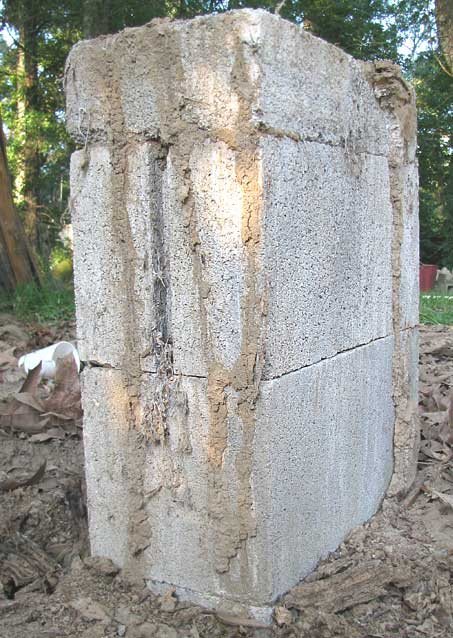
E-03 / EARTHEN TUBES
Trace both ends
Record where the tube meets soil or concealed construction, every affected member, breaks, moisture, and visible insects. “Old-looking” does not mean inactive.
Photo: Jim Conrad, public domain, via Wikimedia Commons
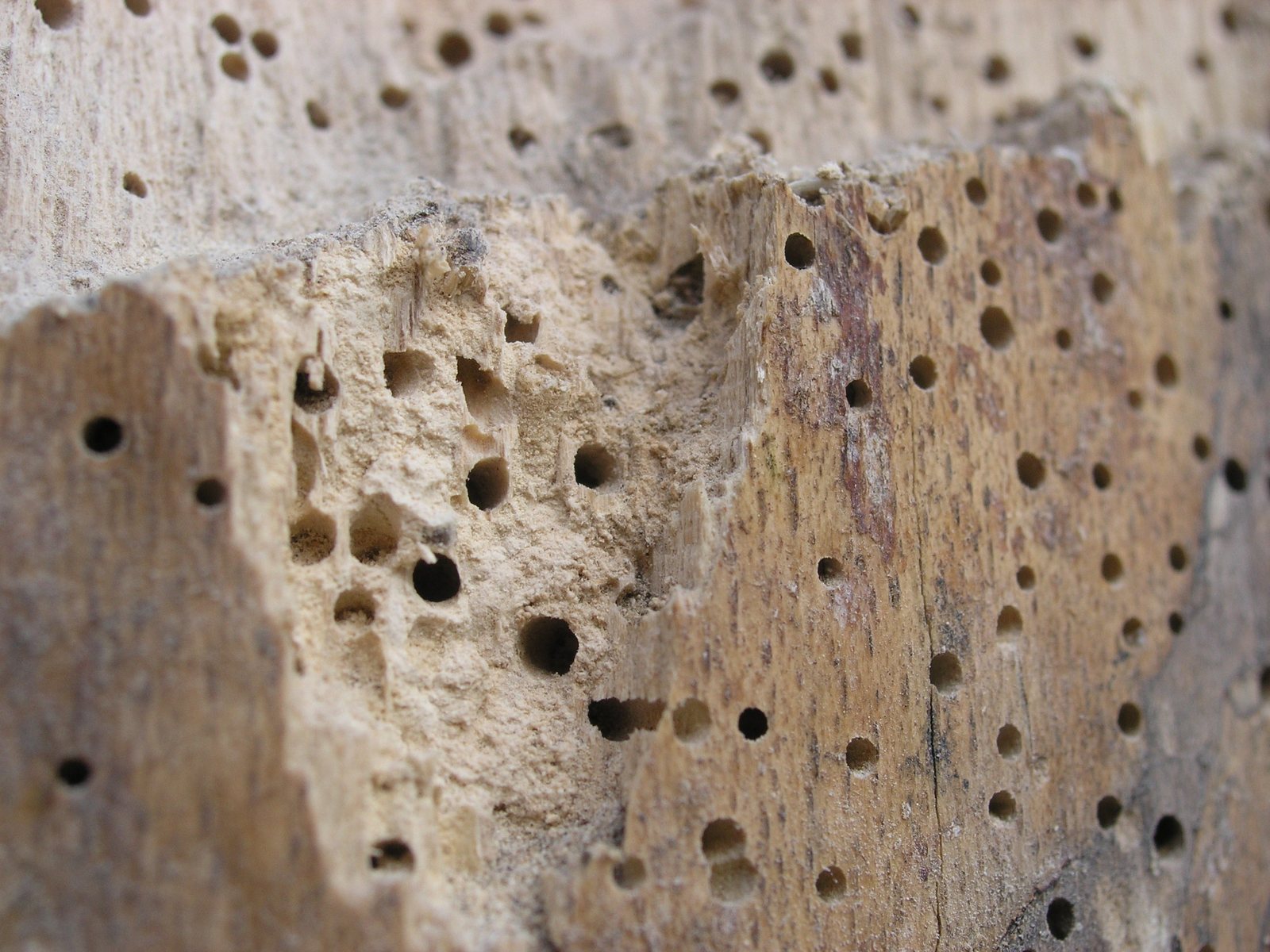
E-04 / SMALL ROUND HOLES
Measure before interpreting
Photograph with scale. Note diameter, edge condition, wood type, powder, distribution, moisture, and specimens. This is a comparison image; identification remains a qualified determination.
Photo: Kai-Martin Knaak, CC BY-SA 3.0, via Wikimedia Commons
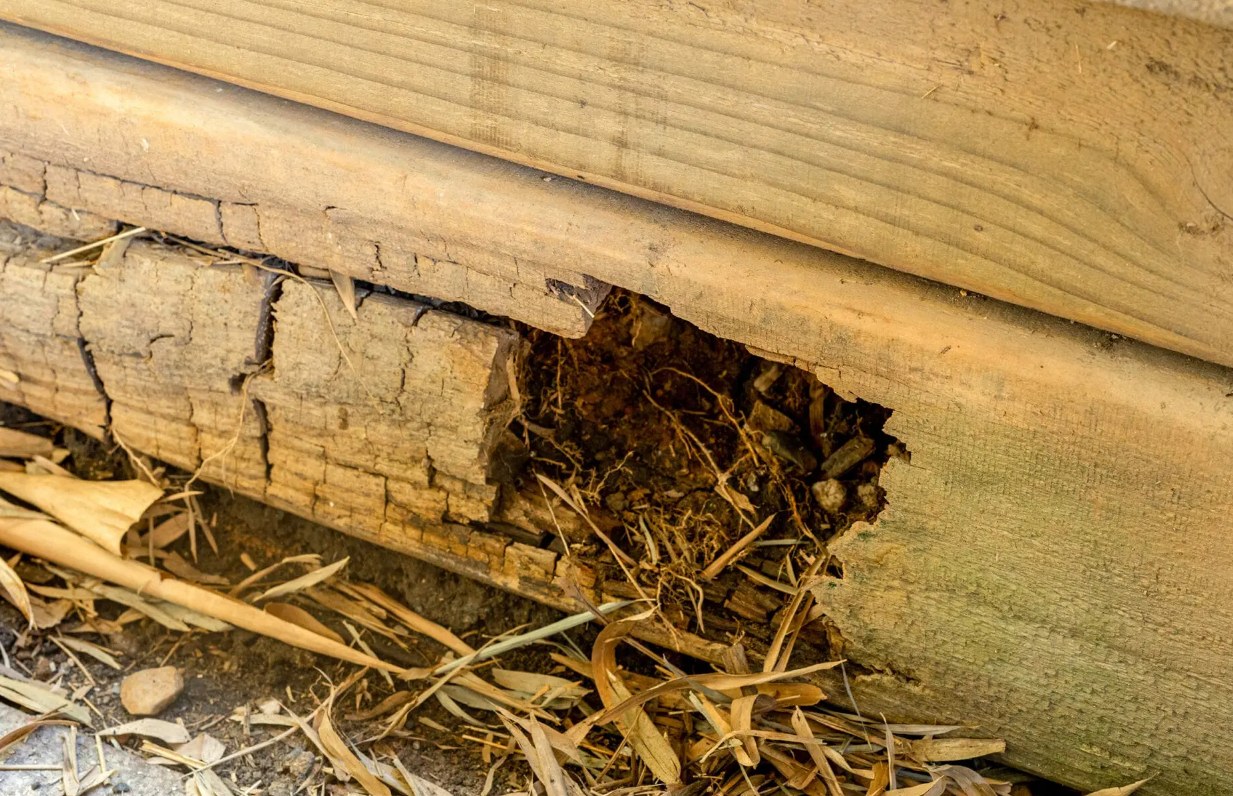
E-05 / ROT + SECTION LOSS
Report the deterioration and follow the water
Wood rot may be named in the home-inspection report. Describe the visible damage, moisture source, member, and limitations; refer repair and structural-capacity questions to the appropriate professional.
Photo supplied by JJ Greive
The house transect
Walk the water route, not just the room list
01
Perimeter
Grade, gutters, downspouts, splashback, vegetation, siding clearance, posts, porches, steps, wood piles, stumps.
02
Substructure
Standing water, bare soil, debris, ventilation, leaks, mudsill, posts, beams, joists, subfloor, inaccessible bays.
03
Envelope
Window and door wetting, failed sealant, deck ledgers, trim, penetrations, eaves, fascia, wall transitions.
04
Interior + attic
Plumbing, condensation, roof leakage, skylights, bath exhaust, wall staining, soft finishes, concealed-risk clues.
05
Report closeout
Exact location, observable evidence, extent, moisture connection, access limit, urgency, qualified referral.
Across the Cascade divide
Three settings. No pest-free zone.
PACIFIC + PUGET LOWLANDS
Persistent wetting
Prioritize crawlspace moisture, wood rot, carpenter and moisture-ant clues, dampwood-termite conditions, anobiid evidence, shaded decks, siding clearance, and roof discharge.
CASCADES + FOREST INTERFACE
Runoff and parent-colony habitat
Read snowmelt, hillside drainage, tree and stump proximity, low decks, log ends, timber details, penetrations, retaining conditions, and seasonal wetting.
COLUMBIA BASIN + EASTERN VALLEYS
Localized water still governs
Give added attention to subterranean-termite access, irrigation at the foundation, loamy-soil areas, buried cellulose, slab penetrations, snowmelt, leaks, and damp crawlspaces.
Report desk
Words that preserve the handoff
These examples are written for a Washington home inspector who is not currently WA-SPI licensed. Edit every bracketed field to match the actual inspection.
Use observable language
wood rot · pest-conducive condition · insect-related evidence · wood-destroying insects · exact location · visible extent · moisture source · SPI/PCO referral
Avoid without WA-SPI authority
termite damage · carpenter-ant infestation · anobiid activity · inactive · old only · clear · pest-free · no infestation · treatment needed
Wood rot
Wood rot and related deterioration were observed at [location/component]. Visible effects included [softness, section loss, cracking, fungal growth, or other observation]. The full concealed extent and remaining structural capacity were not determined. Correct the moisture source and have damaged components evaluated and repaired by an appropriate qualified professional.
Pest-conducive moisture condition
[Standing water / plumbing leakage / restricted drainage / wood-soil contact / cellulose debris / inadequate ventilation] was observed at [location]. This is a pest-conducive condition that can support wood rot and wood-destroying insects. Correct the condition and have the area further evaluated where concealed damage or insect involvement is suspected.
Suspected insect-related evidence
Insect-related evidence consisting of [tubes, holes, frass-like debris, galleries, wings, insects, or damaged wood] was observed at [location]. The organism, activity status, and any insect-attributed damage were not identified as part of this home inspection. Have a Washington-licensed Structural Pest Inspector (SPI) or Pest Control Operator (PCO) evaluate the condition promptly.
Inaccessible or partially inspected area
The [crawlspace/area] was not fully inspected because [specific obstruction or unsafe condition]. Concealed areas can contain wood rot, pest-conducive conditions, or insect activity that was not visible. Provide safe access and obtain further inspection before the inspection contingency expires when practical.
Washington structural-pest FAQ
Fast answers for inspectors and students
Can a Washington home inspector identify termite damage without an SPI license?
No. RCW 18.280.190 and the current Washington home-inspector SOP require an inspector who is not also properly licensed for structural-pest work to refer the identification of, or damage by, wood-destroying insects. The home inspector reports rot, conducive conditions, and general observable evidence, then refers the insect issue.
Must Washington home inspectors report wood rot?
Yes. WAC 308-408C-070 directs the inspector to report all wood rot and pest-conducive conditions discovered during the structure inspection.
What may a non-SPI inspector say about insect evidence?
Describe the visible evidence and location in general terms such as “insect-related evidence” or “wood-destroying insects,” state the limits of the home inspection, and recommend follow-up by a licensed SPI or PCO. Do not identify a particular insect or attribute damage to it.
Are both dampwood and subterranean termites found in Washington?
Yes. Pacific dampwood termites are more prevalent in western Washington and depend on wet wood. Western subterranean termites are more common east of the Cascades and travel from soil, but neither description creates an exclusion zone.
What is required for a complete Washington WDO inspection?
WSDA says the inspector must hold the Structural Pest Inspector endorsement and work for a licensed Structural Pest Inspection Company with current financial responsibility. A complete report must meet WAC 16-228 requirements and carry a WSDA Inspection Control Number.
What conditions are considered conducive to WDOs?
Washington’s list includes earth-to-wood contact or inadequate clearance, vegetation contact, restricted gutters, substructure debris, bare crawlspace soil, standing water, failed caulk or grout at splash areas, plumbing leaks, inadequate ventilation, and other moisture sources.
Primary trail
Verify at the source
The field guide is intentionally practical. These official and university sources carry the governing language and deeper Washington pest material.
For further reading: Explore Washington State University’s Structural Pest Resources for additional bulletins, study material, and pest-management references.
RCW 18.280.190
Home inspector / structural-pest boundary
WAC 308-408C-070
Current structure-inspection requirements
WAC 16-228-2005–2060
Washington WDO inspection rules
WSDA Structural Pest Inspectors
Licensing, company, insurance, and ICN
WSU Structural Pest IPM
Washington bulletins and study resources
WSU Termite Mapping Project
Historical distribution context and caveat
Source set checked September 2, 2026. The current home-inspector SOP revision became effective August 7, 2026. Recheck primary sources before publication updates or regulated work.
Carpenter ant workers are large ants, typically 6–13 mm long, with an evenly rounded thorax and a single node between the thorax and abdomen. They excavate smooth galleries in wood for nesting and can cause significant structural damage, especially where moisture or decay is present.
Illustration: Roger D. Akre and Arthur L. Antonelli, WSU Cooperative Extension EM4040 (1980); via WSU Libraries Digital Collections; no known copyright.