
SOPHI ORGANISM FIELD NOTE 01 · WASHINGTON
Anobiid powderpost beetle damage in Washington structures
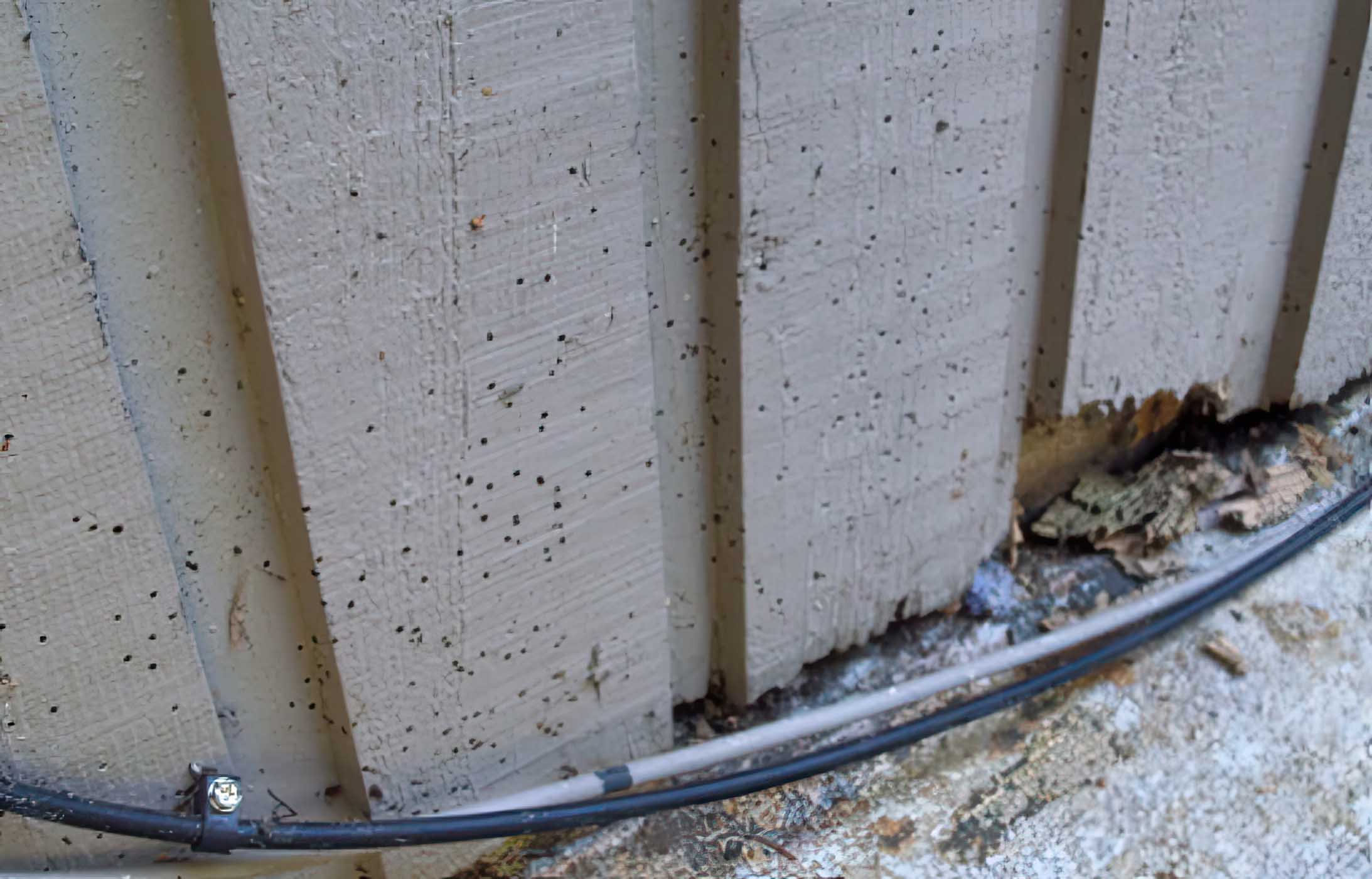
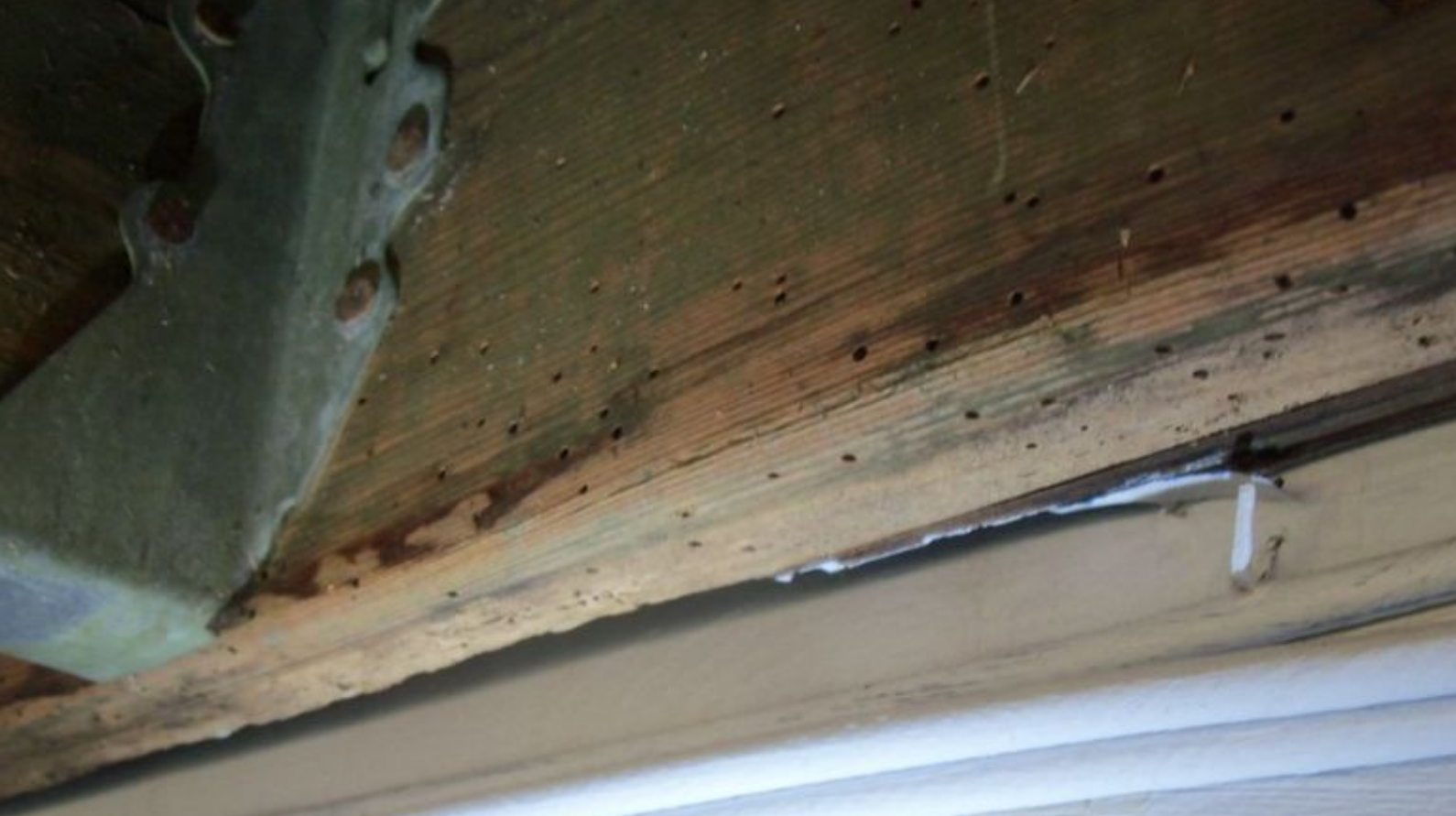
Two close-up field examples of the round emergence holes, softwood damage, and moisture-related conditions associated with structure-infesting anobiid beetles.
Anobiid / deathwatch beetlePowderpost beetle groupHemicoelus gibbicollis (LeConte)Softwood + moisture
What Washington State University teaches
Anobiids are also called deathwatch or powderpost beetles. In Pacific Northwest structures, Hemicoelus gibbicollis (LeConte) is an important species. WSU says their “preferred host woods are softwoods including Douglas fir.” They may also infest cedar, hemlock, and occasionally hardwoods.
Moisture is the major contributing factor. WSU places favorable wood moisture around 14 to 17 percent and points inspectors toward poorly ventilated crawlspaces, damp basements, blocked foundation vents, missing or damaged ground vapor barriers, persistent leaks, and wood located near concrete foundations.
“Fresh piles of granular or gritty frass” are a useful sign of current feeding.
What to record in the field
- Exact member and location, such as siding, sill plate, joist, post, beam, subfloor, or deck ledger.
- Hole diameter, edge condition, distribution, and whether holes are concentrated in sapwood.
- Frass texture, color, location, and whether fresh material returns after cleaning.
- Wood species, visible section loss, softness, checking, and nearby repairs.
- Moisture readings and the likely wetting path, including leakage, drainage, ventilation, or ground moisture.
Current management direction
Do not recommend treatment from old holes alone. First establish whether feeding appears current, then address the conditions that allow reinfestation and evaluate the remaining wood.
01 · DRY THE ASSEMBLY
Correct the moisture source
Repair leakage and drainage defects, clear foundation vents, and restore a continuous ground vapor barrier where applicable.
02 · EVALUATE WOOD
Repair or replace damage
Have localized damaged or infested lumber evaluated for repair or replacement, especially when section loss affects a structural connection.
03 · LICENSED HELP
Refer chemical control
WSU lists no homeowner pesticide recommendation for this pest. Refer treatment decisions and infestation extent to an appropriately licensed pest-management professional.
Washington reporting boundary: a home inspector who is not currently licensed as a Washington Structural Pest Inspector should report the observable condition in general terms and refer organism identification, activity, and insect-attributed damage to a properly licensed SPI or PCO.