OREGON · FIELD NOTE 01
SOPHI field guide for Oregon home inspectors
Oregon structural pests:
read the wet-dry divide.
An Oregon-specific field guide to wood decay, carpenter and velvety tree ants, dampwood and subterranean termites, wood-boring beetles, WDO scope, and the licensing line between inspection and pesticide treatment.
01 / OREGON COMPASS
Start with geography, then follow the water. Persistent coastal wetting, valley rain, mountain snowmelt, irrigation, leaks, and crawlspace moisture create very different routes to the same structural warning signs.
STATE LENS
Coast to high desert
LICENSE LINE
CCB inspection + ODA treatment
REPORT RULE
Disclose scope → describe → qualify
SOURCE CHECK
September 6, 2026
The Oregon scope compass
Inspection authority and pesticide authority are not the same thing.
Oregon does not use Washington’s Structural Pest Inspector credential model. Instead, inspectors must separate the home-inspection rules administered by the Construction Contractors Board (CCB) from pesticide licensing administered by the Oregon Department of Agriculture (ODA).
OREGON CERTIFIED HOME INSPECTOR
Define the WDO scope in the contract.
- The inspection contract must conspicuously state whether the home inspection includes a wood-destroying-organism inspection.
- The contract must also state whether a WDO inspection is available for an additional fee.
- Oregon’s basic home-inspection standards do not require the inspector to report the presence or absence of pests, wood-damaging organisms, rodents, or insects.
- The standards do allow additional observations and opinions within the inspector’s competence and agreed scope.
WDO INSPECTION VS. PESTICIDE WORK
Do not use a treatment license as an inspection shortcut.
- ODA states that an IIHS Structural Pest applicator license may be used for pest inspections, but Oregon does not require that license merely to conduct a WDO inspection.
- ODA also states that the pesticide license confers no special authorization to conduct the inspection.
- Pesticide application, supervision, solicitation, and business operations have separate ODA licensing requirements.
- The IIHS Structural Pest category covers nonfumigant pesticide use in or around structures for wood-destroying pests.
3 QUESTIONS
Before selling the service: Is the work part of a residential home inspection? Does the agreement include a WDO inspection? Will anyone inspect only, or also recommend, sell, supervise, or apply a pesticide treatment? Confirm the current CCB and ODA requirements for the exact service.
Build the Oregon service legally
Choose the service first. Then verify the credential.
Oregon students should not assume that one license covers home inspections, WDO reports, and pesticide control. The correct path depends on what is promised, what is reported, whether the work supports a real-estate transaction, and whether pesticides are involved.
01 / DEFINE
Write the scope
State conspicuously whether WDO inspection is included and whether it is available for an additional fee.
02 / CONFIRM
Check CCB authority
Verify the inspector certification, employing business license, and requirements for the exact inspection service.
03 / SEPARATE
License treatment work
If the business will solicit or apply pesticides, confirm ODA operator, applicator, category, insurance, and supervision requirements.
Oregon-specific caution: CCB lists a person who performs only pest, dry-rot, or WDO inspections among those who are not certified home inspectors by that activity alone. It also identifies a separate exception for an ODA-licensed pesticide operator when the inspection is not for a real-estate purchase or sale. Check with CCB before defining a mixed or stand-alone service.
From rain forest to rain shadow
Six Oregon patterns worth carrying into every inspection.
These are practical priorities, not a statewide incidence map. Local moisture, construction, elevation, imported wood, and site history can outweigh regional expectations.
01 · STATEWIDE DRIVER
Moisture + fungal decay
OSU notes that wood below roughly 20 percent moisture content is less susceptible to fungi and insect attack. In the field, use moisture readings as supporting evidence, not a stand-alone decay diagnosis. Follow leaks, grade, roof drainage, condensation, wet soil, and trapped exterior wetting.
02 · MAJOR INSECT CONCERN
Carpenter ants
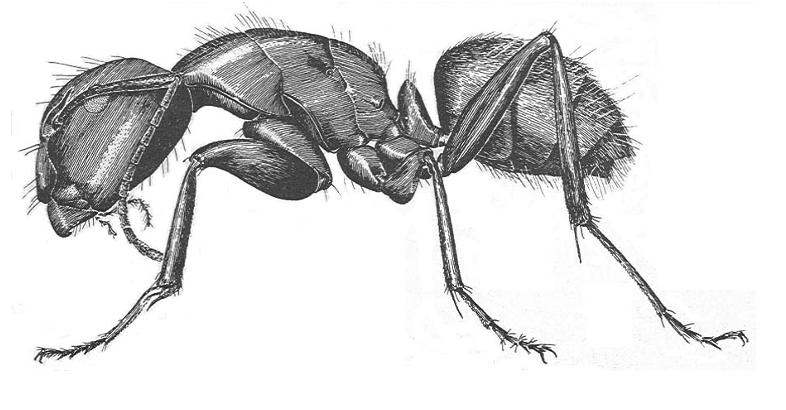
Camponotus modoc is the most common Pacific Northwest carpenter ant identified in OSU guidance. Look for large ants, coarse debris, smooth galleries, wall-void satellite nests, wet wood, and travel routes to trees, stumps, logs, or firewood.
03 · WESTERN OREGON
Pacific dampwood termites

Zootermopsis angusticollis requires wet or damp wood to establish. Pair large termites or swarmers, galleries, and distinctive pellets with the moisture source, decay, wood-soil contact, and loss of section.
04 · EAST OF THE CASCADES
Western subterranean termites
Reticulitermes hesperus is more common east of the Cascades, but no Oregon region should be treated as an exclusion zone. Trace shelter tubes, soil-connected pathways, buried cellulose, slab and foundation joints, porches, posts, steps, and utility penetrations.
05 · WOOD + CONTEXT
Wood-boring beetles
Anobiid or deathwatch-type evidence deserves extra attention in damp softwood, older coastal buildings, and poorly ventilated substructures. Fine powder in susceptible seasoned hardwood can point toward lyctid or powderpost-type beetles. Record hole size, frass, wood type, distribution, moisture, and recurrence.
06 · OREGON ANT DISTINCTION
Velvety tree ants
Liometopum occidentale and the higher-elevation L. luctuosum can tunnel into structural wood and insulation. They may be mistaken for carpenter ants. Their frass is generally finer, temporary nests may occur in wall voids, and crushed workers can produce a coconut-like odor.
Oregon field evidence atlas
Record the clue and the Oregon setting around it.
A defensible note connects material, scale, distribution, exact location, moisture, site access, and visible insects. One hole, pile, tube, or wing is a starting point, not a complete conclusion.
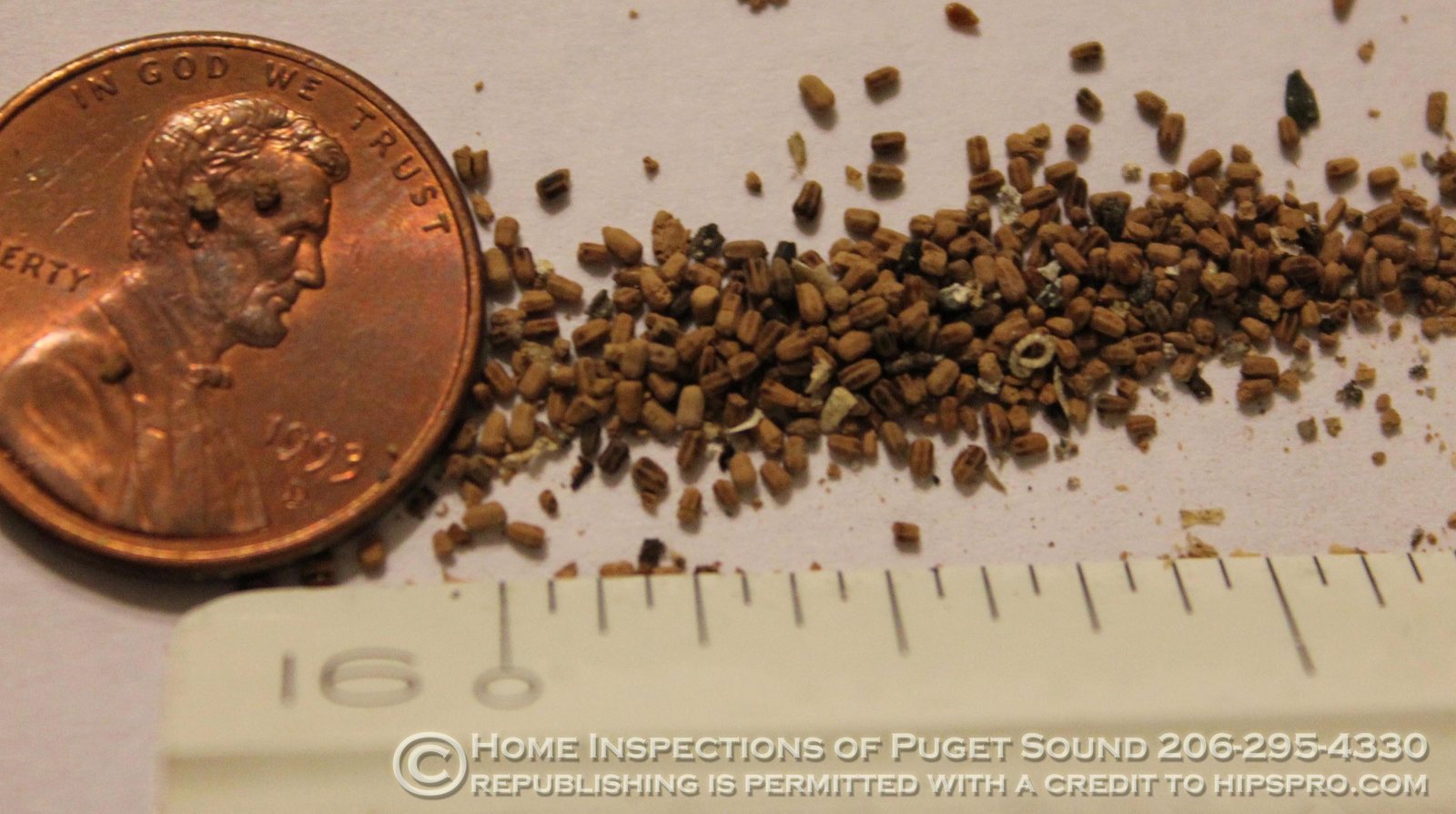
E-01 / PELLET FIELD
Connect pellets to wet wood
Photograph scale, shape, concentration, and source openings. Then document wood moisture, softness, galleries, soil contact, and the route by which the member became wet.
Photo: JJ Greive, CC BY-SA 3.0, via Wikimedia Commons
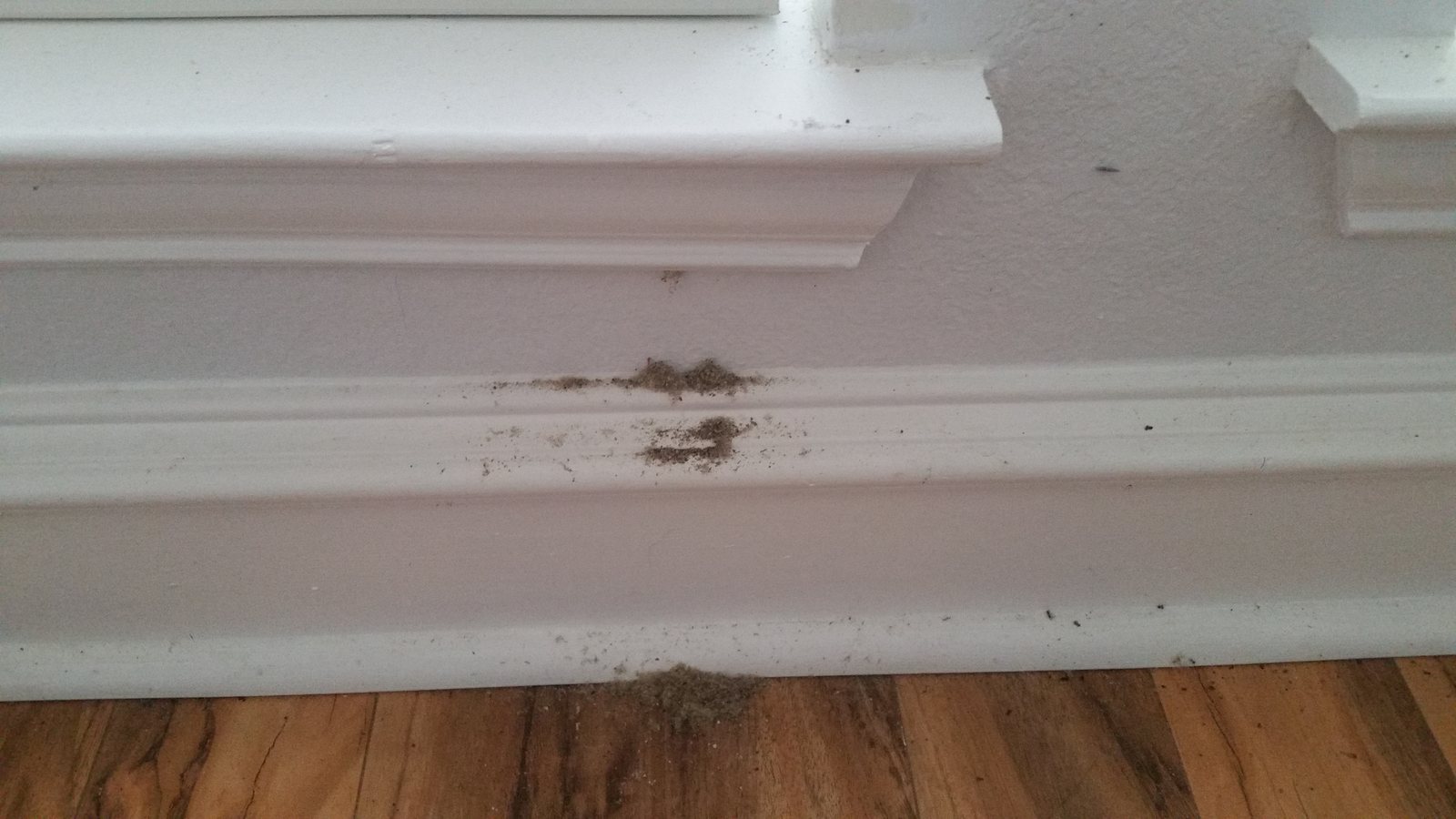
E-02 / FRASS TEXTURE
Compare coarse and fine debris
Coarse fibrous debris, insect parts, and smooth galleries may fit carpenter-ant excavation. Finer debris can occur with velvety tree ants, while flour-like or gritty material may support a beetle comparison. Identify the opening above the pile.
Photo: Thadguidry, CC0, via Wikimedia Commons
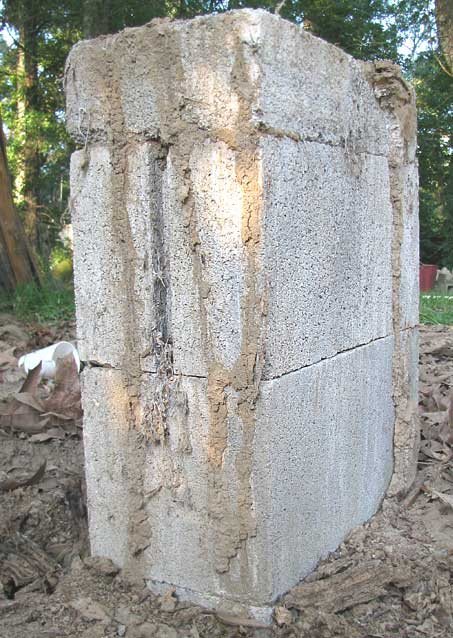
E-03 / SOIL CONNECTION
Trace the protected route
Map every tube-like feature and where it meets soil, wood, cracks, porches, steps, posts, or concealed construction. Note breaks and visible insects without declaring an old-looking tube inactive.
Photo: Jim Conrad, public domain, via Wikimedia Commons
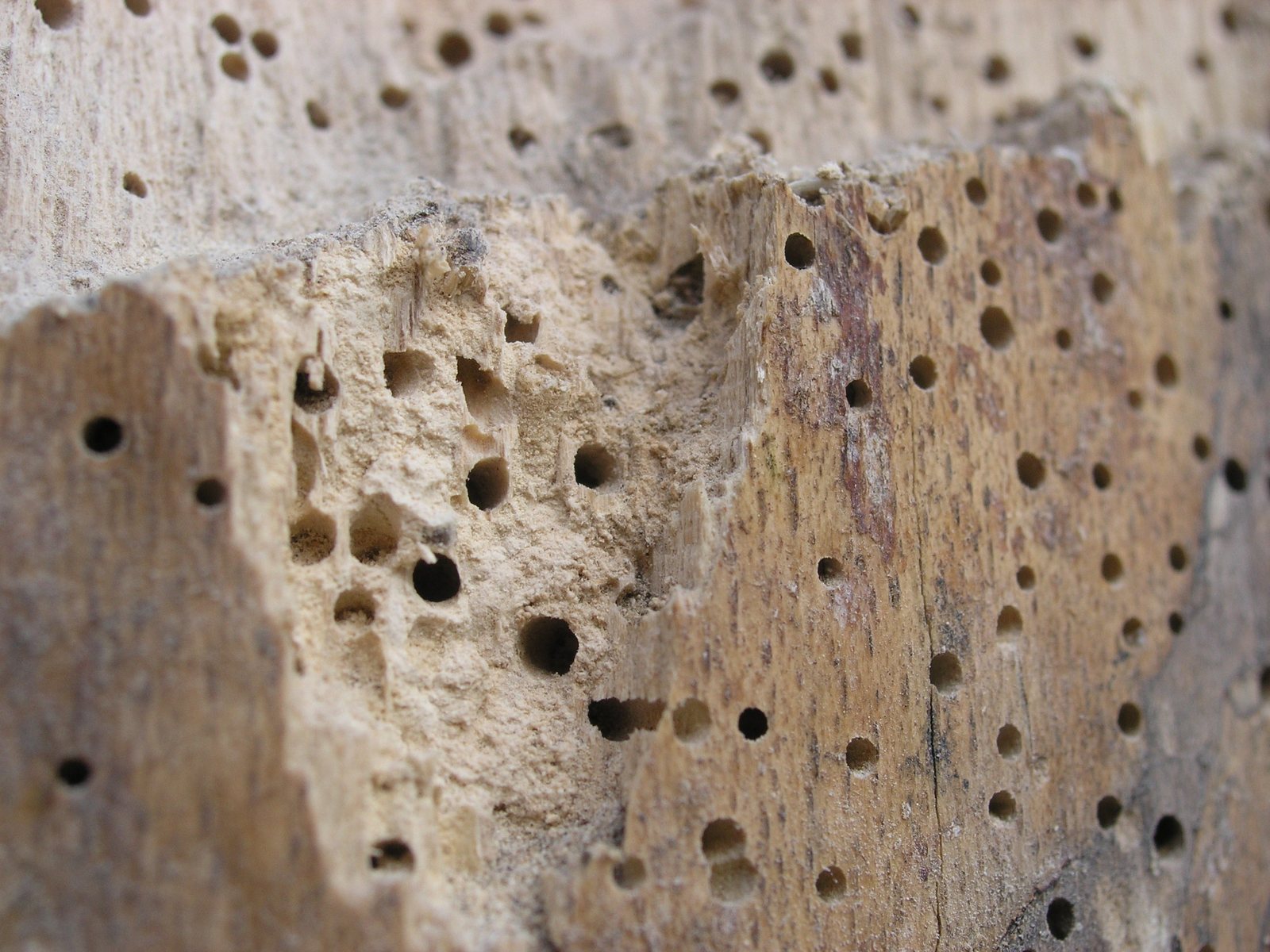
E-04 / EXIT HOLES
Measure before naming
Include a scale and record hole geometry, edge condition, wood species if known, moisture, powder texture, distribution, and whether fresh material reappears. Imported furniture and lumber can change the likely explanation.
Photo: Kai-Martin Knaak, CC BY-SA 3.0, via Wikimedia Commons
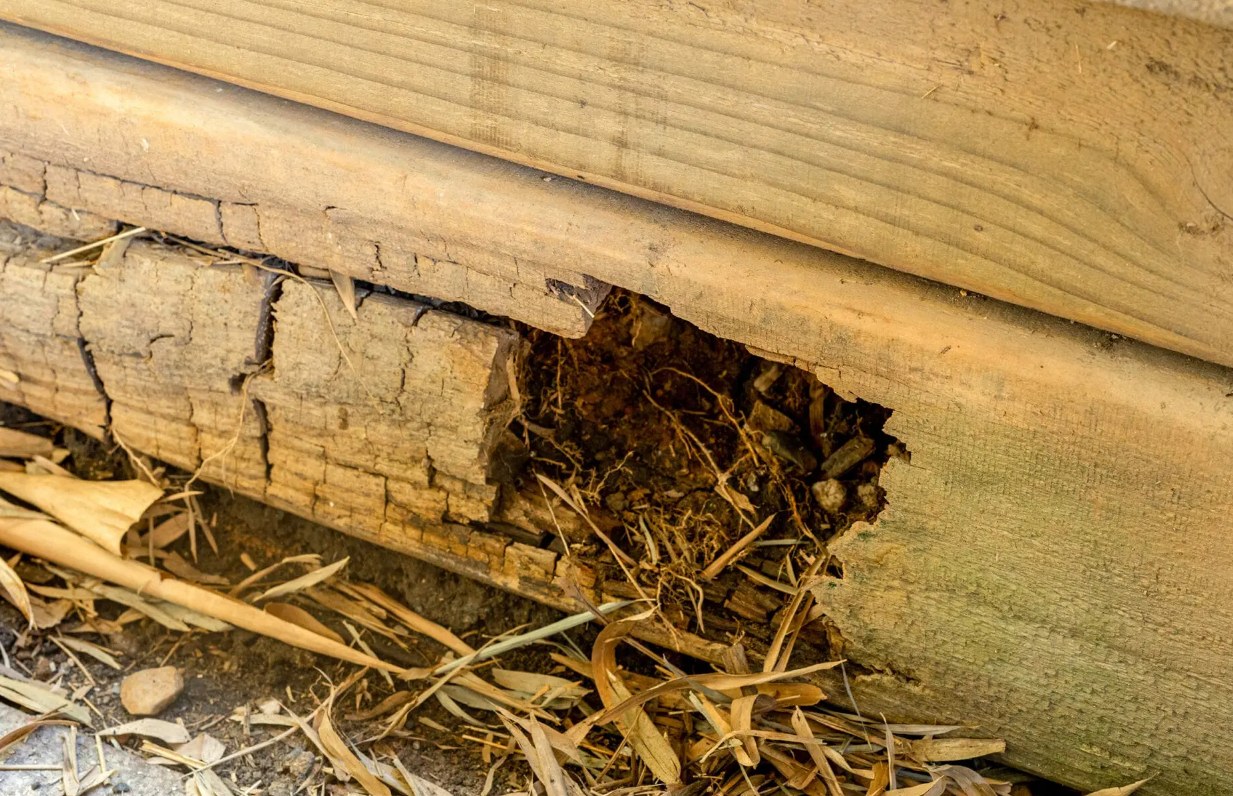
E-05 / DECAY + CAPACITY
Follow the water before recommending repair
Describe softness, cubical or stringy deterioration, fungal growth, cracking, connection damage, and visible section loss. Identify the moisture pathway when possible and refer concealed extent or structural-capacity questions appropriately.
Photo supplied by JJ Greive
| Visible pattern | More consistent with | Document before referring |
|---|---|---|
| Large ants, coarse fibrous frass, smooth galleries | Carpenter-ant-type activity | Ant size, trail, gallery, debris, damp wood, nearby trees or stumps |
| Smaller ants, fine frass, wall-void trail, coconut-like odor | Velvety-tree-ant-type activity | Specimen, trail, nest opening, debris texture, elevation and nearby tree habitat |
| Large termites or swarmers, pellets, wet decayed wood | Pacific dampwood-termite-type activity | Pellet shape and scale, galleries, moisture source, decay, wood-soil contact |
| Earthen tubes, soil in galleries, soil-connected travel | Western subterranean-termite-type activity | Tube continuity, affected members, soil route, slab or foundation access, live insects |
| Small holes with fine powder or gritty pellets | Wood-boring-beetle-type activity | Hole size, frass, wood type, moisture, distribution, recurring fresh material |
The Oregon house transect
Inspect from water source to wood response.
01
Roof + upper envelope
Storm exposure, roof runoff, gutters, valleys, wall intersections, eaves, fascia, attic staining, bath exhaust, and snowmelt paths.
02
Walls + openings
Siding clearance, trim, penetrations, windows, doors, splashback, vegetation, concealed drainage planes, and chronic shaded wetting.
03
Decks + interfaces
Ledgers, posts, beam ends, stairs, porches, rail attachments, flashing, soil contact, trapped debris, and forest-edge habitat.
04
Substructure
Standing water, ground cover, ventilation, condensation, plumbing, mudsills, piers, joists, subfloor, debris, tubes, frass, and inaccessible bays.
05
Report closeout
Exact component and location, visible evidence, moisture relationship, apparent extent, access limits, qualification, and the right referral.
Oregon is not one pest climate
Four regions, four inspection emphases.
OREGON COAST + COAST RANGE
Persistent wetting
Prioritize decay, anobiid-type evidence, dampwood-termite conditions, crawlspace moisture, wind-driven rain, shaded exterior wood, decks, and siding or trim that dries slowly.
WILLAMETTE + WESTERN VALLEYS
Wet winters, dry summers
Follow seasonal roof and drainage exposure, wet crawlspaces, carpenter and velvety tree ants, dampwood termites, irrigation, older foundations, and concealed moisture at remodels.
CASCADES + SOUTHERN MOUNTAINS
Elevation changes the route
Read snowmelt, roof loading and leakage, forest proximity, stumps and logs, hillside drainage, timber details, low decks, and higher-elevation pine tree ants.
CENTRAL + EASTERN OREGON
Localized water still matters
Give added attention to subterranean-termite access, irrigation against foundations, buried cellulose, slab penetrations, plumbing leaks, snowmelt, and damp pockets inside an otherwise dry climate.
Oregon report desk
Write to the agreed scope and the visible evidence.
Oregon does not impose Washington’s blanket SPI wording rule. The safer Oregon discipline is different: disclose whether WDO inspection is included, stay within competence, separate observation from identification, and avoid certainty about activity, concealed extent, or treatment from a single clue.
Useful observable language
visible deterioration · insect-related evidence · tube-like material · frass-like debris · small emergence holes · exact location · moisture pathway · live insects observed / not observed · further identification
Avoid unsupported certainty
inactive · old only · fully repaired · pest-free · no concealed damage · treatment required · structurally sound · species confirmed from one clue
Uncertain insect-related evidence
Insect-related evidence consisting of [holes / frass-like debris / galleries / wings / insects / tube-like material] was observed at [location]. The exact organism, current activity, and concealed extent were not determined from the visible evidence alone. Have the condition evaluated by a qualified Oregon pest professional when identification, activity, or treatment advice is needed.
Moisture-related wood deterioration
Moisture-related wood deterioration was observed at [location/component]. Visible effects included [softness / section loss / cracking / fungal growth / other observation]. Correct the moisture source and have damaged components evaluated and repaired. The concealed extent and remaining structural capacity were not determined.
Possible soil-connected termite evidence
Tube-like material and wood deterioration were visible at [location] near a potential soil pathway. The material was not opened or tested, and current activity was not established. Obtain prompt evaluation by a qualified Oregon pest professional and have damaged structural components assessed as appropriate.
Inaccessible or partially inspected area
The [crawlspace/area] was not fully inspected because [specific obstruction, clearance, or unsafe condition]. Concealed areas can contain moisture damage, decay, or insect activity that was not visible. Provide safe access and obtain further inspection before the inspection contingency expires when practical.
Oregon primary trail
Keep the official and university sources within reach.
This guide is educational. CCB and ODA sources control licensing and scope questions. Oregon State University Extension and the tri-state Pacific Northwest Extension publications provide the strongest local pest and moisture references.
Start with Oregon State University: the Wood Preservation and Wood Products Treatment Training Manual provides a practical Oregon-centered overview of termites, carpenter ants, beetles, decay, and wood protection.
ORS Chapter 701
Oregon contractor and home-inspector statutes
ODA Pesticide Licensing Guide
License types and Oregon’s specific WDO-inspection statement
ODA Licensing Requirements
When a pesticide license is required and the IIHS categories
ODA Exams and Study Materials
Laws and Safety plus IIHS Structural Pest exam resources
OSU EM 8403
Wood preservation, termites, carpenter ants, beetles, fungi, and treatment fundamentals
OSU PNW 624: Key Ant Pests
Illustrated worker and winged-ant keys for Oregon, Washington, and Idaho
OSU EC 1625: Pest Control and IPM
Oregon dampwood and subterranean termite context
PNW Handbook: Termites
Dampwood, subterranean, drywood, distribution, evidence, and management
PNW Wood-Infesting Pests
Current OSU, WSU, and University of Idaho reference hub
CCB Consumer Guide
General inspection expectations and WDO-report context
Source set checked September 6, 2026. Rules, forms, fees, agency interpretation, and publication URLs can change. Verify current CCB and ODA requirements before offering a regulated service.
Carpenter-ant workers vary in size. Camponotus modoc workers are generally matte black with dark red legs, a smoothly rounded thorax, one waist node, and a circle of hairs at the tip of the abdomen. Use magnification and specimens rather than color alone.
Field description grounded in OSU Extension PNW 761 and PNW 624.